How to find age-appropriate games & understand content ratings for kids?
In today’s digital age, video games are an integral part of many children’s lives. While they offer immense benefits like problem-solving skills, creativity, and social interaction, parents often grapple with the challenge of ensuring their kids are playing games that are truly age-appropriate. The sheer volume of games available can be overwhelming, making it difficult to discern what content is suitable for different developmental stages.

Why Age-Appropriateness Is Crucial for Kids’ Gaming
Allowing children to play games designed for older audiences can expose them to themes, language, or situations they are not ready to process. This can range from mild confusion to genuine distress, potentially impacting their emotional and cognitive development. Age-appropriate games, on the other hand, are tailored to a child’s understanding, promoting positive engagement without unnecessary exposure to mature content.
It’s not just about violence; it includes complex narratives, suggestive themes, gambling references, or even overly competitive environments that might be too intense for younger players.
Navigating the World of Game Content Rating Systems
Fortunately, parents aren’t left to guess. Most regions have robust content rating systems designed to help consumers make informed choices. The most prominent systems include the Entertainment Software Rating Board (ESRB) in North America, the Pan European Game Information (PEGI) across much of Europe, and others like USK in Germany or CERO in Japan. These systems act as a universal language for game content, offering a quick and reliable guide.
Understanding ESRB Ratings (North America)
The ESRB provides two key pieces of information: an age rating category and content descriptors. The age rating suggests the appropriate minimum age for players, while content descriptors detail specific elements within the game that triggered that rating (e.g., “Fantasy Violence,” “Mild Language,” “Use of Alcohol,” “Sexual Themes”).
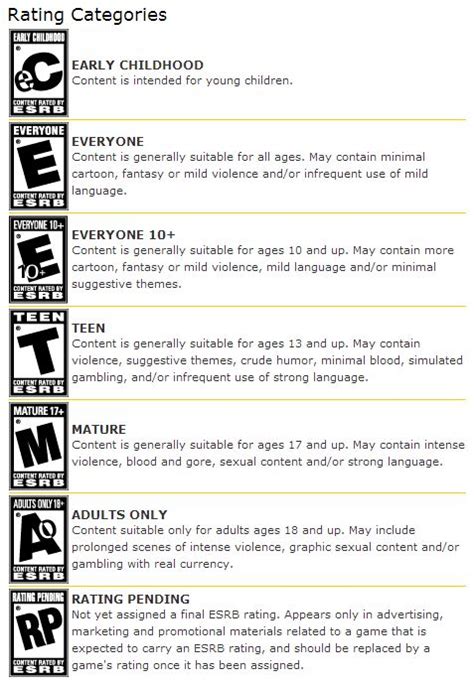
- E (Everyone): Content is generally suitable for all ages. May contain minimal cartoon, fantasy or mild violence and/or infrequent use of mild language.
- E10+ (Everyone 10+): May contain more cartoon, fantasy or mild violence, mild language, and/or minimal suggestive themes.
- T (Teen): Generally suitable for ages 13 and up. May contain violence, suggestive themes, crude humor, minimal blood, simulated gambling, and/or infrequent use of strong language.
- M (Mature): Generally suitable for ages 17 and up. May contain intense violence, blood and gore, sexual content, and/or strong language.
Always look beyond just the letter rating; the content descriptors provide crucial details that might influence your decision, even within the same age category.
Exploring PEGI Ratings (Europe)
Similar to ESRB, PEGI also offers age classifications and content descriptors. Their age categories are typically PEGI 3, PEGI 7, PEGI 12, PEGI 16, and PEGI 18. PEGI descriptors include elements like violence, bad language, fear, gambling, sex, drugs, discrimination, and in-game purchases.
Parents should familiarize themselves with the icons and meanings of the rating system prevalent in their region.
Leveraging Parental Controls and Additional Resources
Beyond understanding rating labels, modern gaming consoles, PCs, and mobile devices offer robust parental control settings. These allow you to restrict gameplay by age rating, limit screen time, manage online interactions, and even control in-game purchases. Activating and customizing these settings is a powerful step in creating a safe gaming environment.
Furthermore, many reputable websites (like Common Sense Media, game review sites, or even the official ESRB/PEGI websites) provide detailed game reviews that delve into specific content, themes, and educational value. Reading these can offer deeper insights beyond what the summary rating provides.

Open Communication with Your Kids
Perhaps the most important tool is open communication. Talk to your children about the games they want to play, why certain games might be unsuitable, and what constitutes a good gaming experience. Encourage them to ask questions and share their thoughts. This not only builds trust but also empowers them to make smarter choices as they grow older.

Making Informed Choices for Healthy Gaming Habits
Finding age-appropriate games doesn’t have to be a daunting task. By understanding content rating systems like ESRB and PEGI, utilizing parental controls, and engaging in open dialogue with your children, you can confidently navigate the gaming landscape. These tools empower you to make informed decisions that ensure your children enjoy the positive aspects of gaming while being protected from content that isn’t right for them.