How to choose engaging, age-appropriate games for my child’s skill level?

Choosing the right games for your child can feel like navigating a vast ocean of options. Every parent wants to provide experiences that are not only fun but also contribute positively to their child’s development. The key lies in finding games that are engaging, perfectly matched to their age, and appropriately challenging for their individual skill level. This guide will walk you through a thoughtful approach to game selection, ensuring playtime is both joyful and enriching.
Understanding Your Child’s Developmental Stage
The first step in selecting the perfect game is to have a clear understanding of your child’s current developmental stage. Different ages correspond to different cognitive, physical, and emotional milestones. For toddlers, sensory exploration and basic motor skills are paramount, making simple puzzles, stacking toys, or soft play items ideal. Preschoolers are ready for more complex imaginative play, early literacy games, and activities that involve fine motor skills like drawing or building with smaller blocks. School-aged children benefit from strategy games, problem-solving challenges, and collaborative activities that foster social skills and critical thinking.
Reviewing developmental charts or consulting with educators can provide valuable insights into what skills are typically emerging at your child’s age. This knowledge helps you filter out games that are either too simple (leading to boredom) or too complex (leading to frustration).
Assessing Their Current Skill Level
Age-appropriateness is a good starting point, but every child is unique. Within an age group, there’s a wide range of individual skill levels. Observe your child during play: what do they gravitate towards? What tasks do they find easy, and what frustrates them? If they master a puzzle quickly, they might be ready for one with more pieces. If they struggle with a certain type of game repeatedly, it might be slightly beyond their current capabilities, and a simpler version could be more beneficial.

Don’t be afraid to experiment. Sometimes a game that seems challenging at first can become a beloved activity with a little guidance and practice. The goal is to find games that offer just enough challenge to encourage growth without overwhelming them. This sweet spot is where true engagement happens.
Matching Games to Interests and Engagement
Even the most developmentally appropriate game won’t be engaging if it doesn’t align with your child’s interests. Does your child love dinosaurs, space, animals, or superheroes? Are they fascinated by construction, art, or music? Incorporating their passions into game selection is a surefire way to capture and hold their attention. A child who loves animals will be far more engaged with an animal-themed matching game than a generic one.
Consider their play style too. Is your child more inclined towards solitary, imaginative play, or do they thrive in group settings with competitive or cooperative games? Offering a variety of game types can also help you discover new interests and develop different skill sets.
Balancing Challenge and Fun
The perfect game offers a “just right” challenge – enough to stretch your child’s abilities without causing undue stress or boredom. Games that are too easy quickly lose their appeal, while those that are too hard can lead to frustration and a sense of failure. Look for games with adaptable difficulty levels or those that can be played in different ways as your child grows.
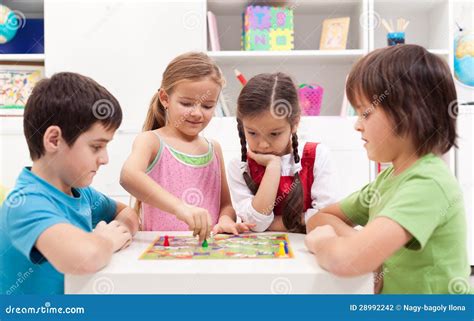
Remember that the primary purpose of play is joy. While learning is a wonderful byproduct, if a game isn’t fun, your child won’t want to play it. Encourage effort and problem-solving, celebrating small victories along the way. Sometimes, playing alongside them can provide the necessary scaffolding for them to overcome initial challenges and develop confidence.
Types of Games to Consider
- Educational Games: These include puzzles, logic games, early math or literacy activities, and science kits. They are designed to teach specific concepts while being enjoyable.
- Physical Games: Ball games, outdoor adventures, obstacle courses, or even simple active video games promote gross motor skills, coordination, and healthy activity.
- Creative Games: Art supplies, building blocks (LEGOs, Magnatiles), play-doh, dress-up clothes, and musical instruments foster imagination, fine motor skills, and self-expression.
- Social/Cooperative Games: Board games, card games, and team-based activities teach turn-taking, negotiation, strategy, and sportsmanship.

The Role of Trial and Error
It’s perfectly normal for some games to be a hit and others a miss. What captivates one child might not appeal to another, even within the same household. Don’t be discouraged by games that don’t immediately click. Sometimes a game needs to be revisited later, or perhaps your child simply isn’t interested in that particular type of play. The process of choosing games is an ongoing one, evolving as your child grows and changes.

Pay attention to what works and what doesn’t. This feedback loop will refine your understanding of your child’s unique play profile, making future game selections even more successful.
Involving Your Child in the Choice
For older children, involving them in the game selection process can significantly boost their engagement. Present a few options that you’ve already screened for appropriateness and let them make the final decision. This not only empowers them but also ensures they feel ownership over their playtime choices. A trip to a toy store or a browsing session online together can be a fun activity, fostering discussion about what makes a game appealing.
Selecting the ideal games for your child is an art, not a science. It requires observation, understanding, and a willingness to adapt. By focusing on your child’s developmental stage, assessing their individual skill level, aligning with their interests, and balancing challenge with pure fun, you can curate a play environment that is both stimulating and deeply rewarding. Remember, the goal is to foster a love for learning and discovery through the magic of play.