




How do I choose truly age-appropriate games for my child?

The Importance of Age-Appropriate Play
As parents, we want our children to thrive, learn, and have fun. Games play a significant role in a child’s development, offering opportunities for problem-solving, social interaction, creativity, and physical activity. However, the sheer volume and variety of games available today — from board games and puzzles to video games and outdoor activities — can make choosing the right ones feel overwhelming. The key lies in understanding what “age-appropriate” truly means and how to apply it effectively.
Choosing games that align with your child’s developmental stage isn’t just about avoiding content that’s too mature; it’s also about ensuring the game is challenging enough to engage them without causing frustration, and simple enough to be understood and enjoyed. Misjudging this balance can lead to boredom, disinterest, or even negative emotional responses.

Understanding Developmental Milestones
The first step in selecting the right game is to have a basic understanding of child development. Children’s cognitive, emotional, social, and physical abilities evolve rapidly. A game perfect for a 3-year-old might bore a 7-year-old, and a game designed for an 8-year-old could be too complex or frightening for a 5-year-old.
Infants (0-12 months)
Focus on sensory exploration: soft toys, rattles, peek-a-boo games, board books, and simple cause-and-effect toys.
Toddlers (1-3 years)
Emerging language and motor skills: stacking blocks, simple puzzles, push-and-pull toys, picture books, imaginative play with dolls/animals, and basic shape sorters.
Preschoolers (3-5 years)
Developing social skills, creativity, and fine motor control: art supplies, dress-up clothes, more complex puzzles, simple board games (like Candy Land), building sets (LEGO Duplo), and outdoor play.
School-Aged Children (6-12 years)
Advanced problem-solving, strategic thinking, and social interaction: strategy board games, complex building kits (LEGO, K’nex), sports, video games with age-appropriate themes (think E-rated), and creative arts.

Beyond Ratings: What to Truly Consider
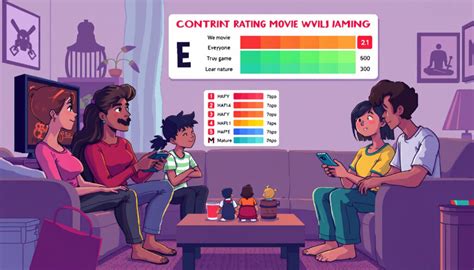
While ratings systems like ESRB (for video games) or age recommendations on board games provide a good starting point, they don’t tell the whole story. These ratings primarily focus on content suitability (violence, language, themes) rather than cognitive complexity or emotional readiness.
- Cognitive Challenge: Is the game too simple, too complex, or just right? Does it require skills your child is developing or has already mastered?
- Emotional Maturity: Does the game involve themes (e.g., competition, failure, abstract concepts) that might cause anxiety or confusion for your child? Some children are more sensitive than others.
- Social Interaction: Does the game encourage positive social skills like turn-taking, cooperation, and good sportsmanship, or does it promote isolation or excessive competition?
- Physical Activity: For younger children, games that encourage movement are crucial. For older children, balance screen time with active play.
- Your Child’s Interests: What genuinely excites them? A game they love will be far more engaging and beneficial than one chosen purely for its developmental benefits if it doesn’t align with their passions.

Observing and Engaging with Your Child
The best way to know if a game is truly age-appropriate is to observe your child playing it. Are they engaged? Frustrated? Bored? Do they understand the rules? Do they ask questions? Sometimes, a game might be “age-appropriate” on paper but not for your individual child’s temperament or current development.
Playing alongside your child, especially when introducing a new game, offers invaluable insights. You can gauge their comprehension, offer support, and adapt the rules if necessary. It also creates a wonderful bonding opportunity and allows you to model positive play behaviors.

Trial, Error, and Flexibility
Remember that choosing games is not an exact science. You’ll likely encounter instances where a highly recommended game doesn’t click with your child, or a game you thought was too advanced becomes their new favorite. Be open to trial and error.
It’s also okay to put a game away for a few months and reintroduce it later. Children’s abilities can change dramatically in a short period. The goal is to provide a rich and varied play environment that supports their growth and brings joy. By combining general developmental guidelines with close observation of your unique child, you can confidently navigate the world of games and make choices that truly benefit them.

Empowering children through thoughtful game selection not only enriches their play but also lays a foundation for critical thinking, creativity, and social skills that will serve them well throughout life. Make playtime a priority, and choose wisely!