



How to find age-appropriate games that genuinely engage kids?

The Quest for Engaging Play: More Than Just a Game
In today’s world, games are an integral part of childhood, offering everything from digital adventures to classic board game nights and imaginative outdoor play. The challenge for parents isn’t just finding any game, but discovering those truly age-appropriate options that genuinely capture a child’s interest, foster development, and provide lasting enjoyment. It’s about striking a balance between fun, learning, and suitability.
Navigating the vast landscape of games can feel overwhelming. How do you cut through the noise to find experiences that resonate with your child’s unique personality and developmental stage, while also upholding your values as a parent? Let’s explore a strategic approach.

Understanding Age Ratings & Developmental Milestones
Age Ratings Aren’t Everything, But They’re a Start
Game ratings systems like ESRB (Entertainment Software Rating Board) in North America, PEGI (Pan European Game Information) in Europe, or CERO in Japan, provide a baseline. They indicate content suitability regarding violence, language, suggestive themes, and more. While crucial for safety, these ratings primarily focus on content warnings, not necessarily on a game’s educational value, complexity, or engagement potential for a specific age group. An ‘E for Everyone’ game might still be too complex for a three-year-old or too simplistic for an eleven-year-old.
Beyond the Label: Child Development Matters
True age-appropriateness goes deeper than a simple number. Consider your child’s:
- Cognitive Skills: Can they follow complex instructions? Do they enjoy problem-solving? What’s their attention span like?
- Motor Skills: Does the game require fine motor control (like precise button pressing) or gross motor skills (like running and jumping)?
- Emotional Maturity: How do they handle losing? Can they differentiate between fantasy and reality? Are they sensitive to certain themes or visuals?
- Social Development: Do they prefer solitary play, cooperative games, or competitive challenges?
A game that aligns with these developmental stages will naturally be more engaging and less frustrating. For instance, a preschooler might love simple pattern-matching games, while a middle-schooler thrives on strategic thinking games.

Balancing Interests, Engagement, and Educational Value
Tune In to Their Interests (and Broaden Them)
The easiest way to ensure engagement is to start with what your child loves. Do they enjoy building? Exploring? Telling stories? Solving mysteries? Look for games that tap into these passions. However, don’t be afraid to gently introduce new genres or themes. A child who loves fantasy might also enjoy a strategy game with a similar narrative, expanding their horizons without losing their interest.
The Engagement Factor: Why Some Games Stick
Genuine engagement comes from a blend of challenge, reward, creativity, and sometimes, social interaction. Games that allow for agency, choice, and a sense of accomplishment are often more captivating. Look for:
- Open-ended play: Games that allow kids to create their own stories or solutions.
- Progressive difficulty: Games that start easy and gradually become more challenging, keeping pace with a child’s learning curve.
- Meaningful rewards: Not just points, but new abilities, items, or story progression.
- Opportunities for collaboration or healthy competition.

Sneaking in Learning: Games with Hidden Benefits
Many games, both digital and physical, offer significant developmental benefits. They can enhance problem-solving skills, improve spatial reasoning, boost literacy and numeracy, and even teach history or science. Look for games that:
- Require strategic thinking and planning.
- Involve reading, writing, or mathematical concepts.
- Promote creativity and imagination.
- Encourage communication and teamwork.
These ‘stealth learning’ games can be incredibly powerful because the child is learning without even realizing it, driven by the sheer enjoyment of play.
Practical Strategies for Parents
Involve Your Child in the Choice
When appropriate, bring your child into the decision-making process. Discuss potential games, watch trailers together, or read reviews. This not only empowers them but also gives you insights into their preferences and allows you to guide them toward suitable options. Establish clear boundaries regarding content and screen time upfront, making it a collaborative effort rather than a dictatorial one.
Diversify Play: Beyond the Screen
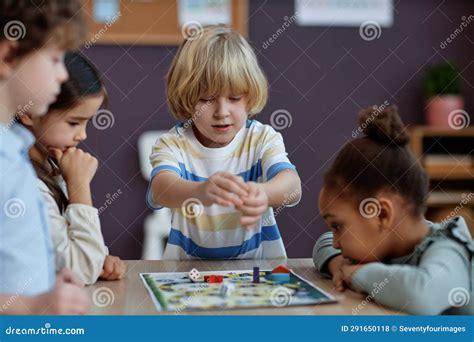
While digital games have their place, remember the rich world of non-digital play. Board games, card games, puzzles, and outdoor activities offer unique benefits:
- Board Games: Teach turn-taking, strategy, patience, and social interaction.
- Card Games: Enhance memory, mathematical skills, and quick thinking.
- Puzzles: Develop spatial reasoning, problem-solving, and fine motor skills.
- Outdoor Play: Crucial for physical development, creativity, and connecting with nature.
A healthy play diet includes a mix of all these types of games, ensuring holistic development and preventing over-reliance on any single medium.

Observe, Evaluate, and Adapt
Once a game is introduced, observe your child’s reaction. Are they genuinely engaged or quickly frustrated? Does their mood or behavior change after playing? Are they learning new things or just passively consuming? Be prepared to adjust your choices. What works for one child might not work for another, and what works at one age might not at another. Flexibility is key to keeping playtime positive and productive.
Conclusion: A Thoughtful Approach to Play
Finding age-appropriate games that genuinely engage kids is an ongoing process of observation, research, and communication. By looking beyond simple age ratings, considering your child’s unique developmental stage, balancing their interests with opportunities for growth, involving them in the decision, and diversifying their play experiences, you can cultivate a rich and rewarding play environment. Ultimately, the goal is to provide games that not only entertain but also enrich, teaching valuable skills and fostering a lifelong love of learning and exploration.