What’s the best way to structure a new player guide for a complex RPG to prevent info overload?

Complex role-playing games offer unparalleled depth and hundreds of hours of content, but their very complexity can be a significant barrier to entry for new players. Bombarding newcomers with pages of intricate mechanics, lore, and optimal strategies immediately leads to “info overload,” often resulting in frustration and early abandonment. The key to successful onboarding lies not in what information you provide, but how and when you provide it.
Core Principles for Preventing Info Overload
Before diving into structural specifics, it’s crucial to establish foundational principles that will guide your entire design process for a new player guide.
Progressive Disclosure
This is arguably the most vital concept. Instead of dumping all information at once, present it in stages, revealing new mechanics or concepts only as they become relevant or necessary. Think of it as a gentle ramp, not a sheer cliff. Players should learn what they need to know now, with more advanced concepts held back until they’ve mastered the basics.
Chunking Information
Break down large, complex topics into smaller, digestible segments. A guide explaining “Combat Mechanics” might be better served as “Basic Attacks,” “Defensive Maneuvers,” “Status Effects,” and “Advanced Synergies.” Each chunk should be self-contained and easy to absorb, preventing the player from feeling overwhelmed by a wall of text or an endless list of rules.
Prioritizing Practicality Over Theory
New players learn best by doing. Your guide should focus on practical application rather than abstract explanations. Instead of merely defining “Agility,” explain how increasing Agility benefits their character in combat or exploration. Provide examples, scenarios, and actionable advice that players can immediately apply in-game.
Structuring Your Guide: A Phased Approach
A phased approach aligns perfectly with progressive disclosure, mirroring the player’s journey through the game itself.
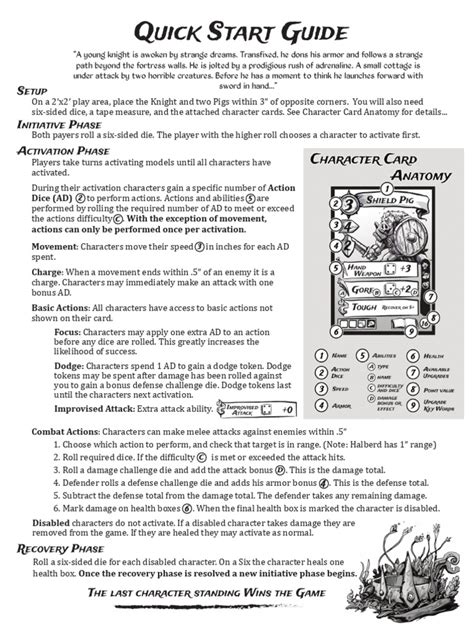
1. The Quick Start: Absolute Essentials
This section is designed to get players into the game and performing basic actions within minutes. It covers:
- Movement controls
- Basic interaction (looting, talking to NPCs)
- Fundamental combat (if applicable, 1-2 core abilities)
- How to save and load
- The immediate objective: “What do I do first?”
This isn’t a comprehensive guide; it’s a launchpad.

2. Early Game: Foundational Mechanics
Once players can move and interact, introduce the next layer of complexity. This might include:
- Character creation basics (if not covered in Quick Start)
- Inventory management & basic equipment
- Core questing mechanics
- First tier of skill/ability progression
- Understanding the UI (minimap, health bars, quest log)
- Key early-game challenges and how to overcome them
Focus on concepts that are consistently relevant in the first few hours of gameplay.
3. Mid-Game: Expanding Horizons
As players become comfortable with the basics, they’re ready for more nuanced systems. This section could cover:
- Advanced combat tactics or character builds
- Crafting, enchanting, or resource gathering systems
- Faction relationships or reputation systems
- Exploration mechanics (fast travel, secret finding)
- Companion management or party composition
These are systems that deepen the experience but aren’t strictly necessary from the outset.
4. Late Game & Endgame: Mastery and Nuance
For veteran players looking to optimize, explore deep lore, or tackle post-game content. This section often includes:
- Optimized character builds and stat allocation
- Advanced economy or trading systems
- Raid strategies or high-level dungeon tactics
- Lore deep-dives and hidden secrets
- Player-versus-player (PvP) mechanics, if applicable
This part of the guide caters to players who are already invested and seeking to master the game’s every facet.
Content Delivery & Format
How you present the information is almost as important as the information itself.
Interactive In-Game Tutorials
Whenever possible, integrate learning directly into the gameplay. Contextual pop-ups, guided sequences, and dynamic objectives that explain mechanics as they’re encountered are far more effective than external documentation alone. These “learn-as-you-go” tutorials reinforce concepts immediately.

Searchable Knowledge Base or Wiki
For information that isn’t suitable for in-game tutorials or needs quick reference, a well-organized, searchable knowledge base is invaluable. This allows players to look up specific terms, items, or mechanics without sifting through an entire guide. Include a glossary of terms for easy reference.
Visual Aids and Examples
Screenshots, diagrams, flowcharts, and short video clips can clarify complex concepts far more effectively than text alone. Show, don’t just tell. For instance, a diagram illustrating a skill tree or a screenshot pointing out UI elements can significantly reduce confusion.
Empowering Players Beyond the Guide
A good guide doesn’t just provide answers; it teaches players how to find answers themselves and fosters a sense of discovery.
Encouraging Experimentation and Discovery
Sometimes the best guide is one that steps back and encourages players to try things out. Design your guide to offer enough information to get started, but leave room for personal discovery and experimentation. Hint at possibilities rather than spelling out every single optimal path.
Leveraging Community & External Resources
Acknowledge that your official guide can’t cover absolutely everything. Point players towards community forums, fan-made wikis, content creators, or official developer FAQs. A thriving community is a powerful learning tool in itself.

Conclusion: The Journey of Discovery, Not a Textbook
Creating a new player guide for a complex RPG is about curating a learning journey. By embracing progressive disclosure, chunking information, prioritizing practicality, and adopting a phased structure with effective delivery methods, you can transform the daunting initial hours into an engaging and empowering experience. The goal isn’t to provide all the answers upfront, but to give players the tools and confidence to uncover the game’s wonders at their own pace.