How to simplify complex game mechanics for new players in beginner how-to guides?
Introducing new players to games with intricate systems can be a daunting task. A well-crafted beginner’s guide doesn’t just list features; it thoughtfully deconstructs complexity, making the learning curve feel like a gentle slope rather than a vertical cliff. The goal is to empower new players, building their confidence so they can enjoy the game rather than feel overwhelmed.
Understand Your Audience
When writing for beginners, assume zero prior knowledge. They don’t know the jargon, the meta, or the unwritten rules. Your guide should start from the absolute ground floor, explaining concepts as if the reader has never touched a video game before, or at least, never one of this genre.
Start with the Core
Focus on the fundamental mechanics necessary to play the game immediately. What does a player absolutely need to know to move, interact, and survive the first few minutes? Defer advanced topics, obscure lore, or high-level strategies for later sections or separate, intermediate guides.
Break Down Complexity
Complex mechanics are often a collection of simpler, interacting parts. Your job is to disentangle these components and present them individually before showing how they fit together.
Chunking Information
Divide your guide into small, digestible sections. Each section or paragraph should ideally cover only one core concept or a very closely related set of ideas. Use headings, subheadings, bullet points, and numbered lists to break up text and improve readability.
Use Analogies and Metaphors
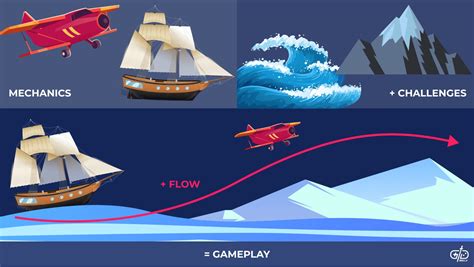
Relate in-game mechanics to real-world concepts or more universally understood ideas. For example, explain a game’s ‘aggro’ system as a character drawing enemy attention like a red cape to a bull, or a ‘skill tree’ as a career path where you specialize in certain abilities. This helps bridge the gap between abstract game logic and a player’s existing knowledge.
Leverage Visuals and Examples
A picture is worth a thousand words, especially when explaining visual or interactive mechanics. Don’t just tell players what to do; show them.
Step-by-Step Instructions
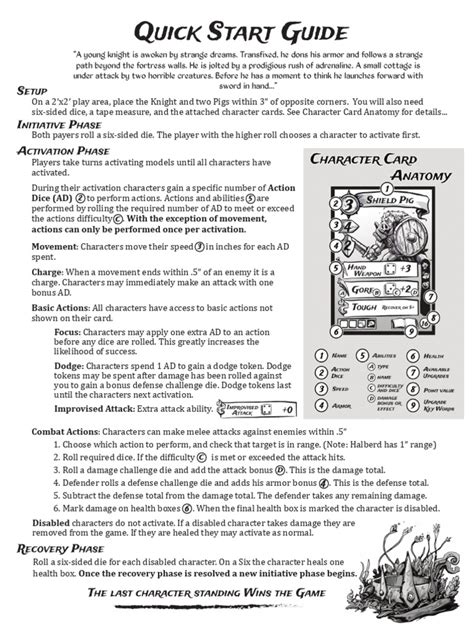
For any action-oriented mechanic (e.g., crafting, combat rotations, menu navigation), provide clear, sequential instructions. Accompany these with screenshots or diagrams that highlight exactly what the player should see or click. Arrows, circles, and labels on images can dramatically clarify complex UIs or sequences.

Introduce Gradually
Avoid overwhelming players by front-loading too much information. Instead, introduce mechanics progressively, building upon previously learned concepts.
Layering Information
Start with the most basic form of a mechanic, then introduce nuances, exceptions, or advanced applications later. For instance, first explain how to use a basic attack, then introduce special abilities, then explain how those abilities interact with status effects, and so on. This mirrors how many games introduce mechanics through their early tutorials.
Clarity in Language
The words you choose are paramount. Simple, direct language minimizes confusion.
Avoid Jargon (or Define It)
While some game-specific terms are unavoidable, strive to use plain language wherever possible. If a technical term is absolutely necessary (e.g., ‘cooldown’, ‘DPS’, ‘AoE’), define it clearly the first time it’s used. Consider a glossary for frequently used game-specific terms.
Encourage Practice
Learning by doing is often the most effective method. Your guide can facilitate this by recommending practical application.
Suggest specific in-game areas or activities where new players can safely practice the mechanics they’ve just learned. For example, ‘Try using your new spell against the training dummies in the main hub,’ or ‘Experiment with resource gathering in the starting zone until you feel comfortable.’

Conclusion
Simplifying complex game mechanics for new players isn’t about dumbing down the game; it’s about intelligent communication. By understanding your audience, breaking down information, utilizing effective visuals and analogies, introducing concepts gradually, and maintaining linguistic clarity, you can create guides that not only inform but also truly onboard new players into the rich worlds games have to offer.