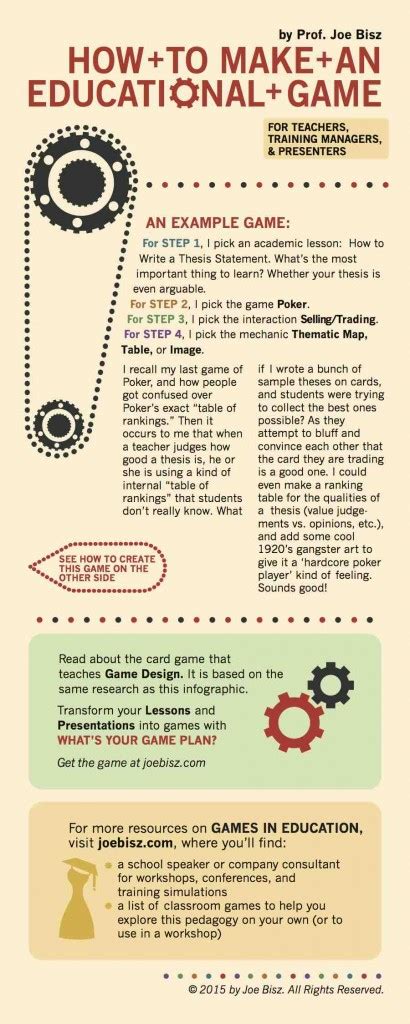
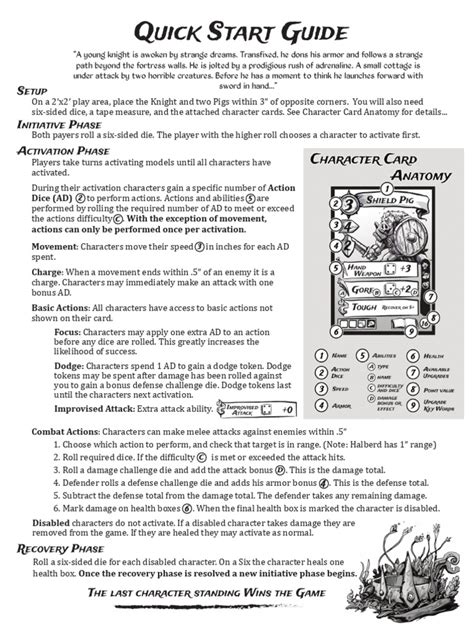
How to simplify complex game mechanics for new player guides without oversimplifying?

The Delicate Art of Onboarding: Explaining Complexity Without Loss
Modern video games often boast intricate systems, deep lore, and complex mechanics that can be daunting for new players. The challenge for guide writers isn’t just to explain these elements, but to do so in a way that is accessible, engaging, and doesn’t oversimplify to the point of being unhelpful or misleading. It’s a delicate balance: providing enough information to empower new players without overwhelming them.
Understanding the New Player Mindset
Before you can simplify, you must understand who you’re writing for. New players lack context, jargon familiarity, and often the muscle memory veterans take for granted. Their primary goal is to understand how to play and progress, not necessarily to master every nuance on day one. Your guide should anticipate their questions, address common stumbling blocks, and build understanding layer by layer.
Identify Core Concepts vs. Advanced Nuances
Every complex mechanic has foundational elements. Separate what a player absolutely needs to know to participate from what is crucial for optimization or advanced strategy. For instance, in an RPG, a new player needs to know how to equip gear and that stats affect performance. They don’t immediately need to understand optimal stat allocation for every class or the intricate synergies of legendary items.
Strategies for Effective Simplification
1. Progressive Disclosure: Layering Information
Don’t dump all information at once. Introduce concepts incrementally, building upon previously explained ideas. Start with the “what” and “why” before diving into the “how” and “when.” For example, explain what ‘aggro’ is and why it matters before detailing how various abilities generate or mitigate it.

2. Use Clear, Concise Language & Analogies
Avoid game-specific jargon where possible. If you must use it, define it immediately and clearly. Analogies can be incredibly powerful tools, relating complex game concepts to real-world scenarios players already understand. For instance, explaining a character’s “threat generation” in an MMO might be likened to a magnet attracting enemies.
3. Break Down Mechanics into Manageable Chunks
A single “complex mechanic” is often a system of interconnected smaller mechanics. Deconstruct it. Explain each component individually before showing how they interact. For a crafting system, explain gathering resources, then recipes, then stations, then the process of crafting, and finally, the outcomes.
4. Leverage Visual Aids and Examples
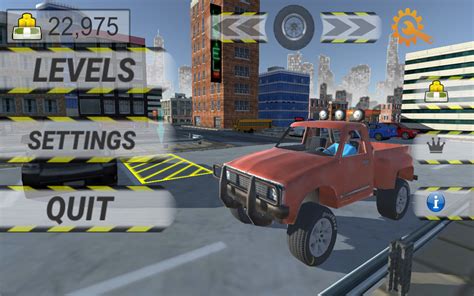
Text alone can struggle with intricate systems. Screenshots, diagrams, flowcharts, or even conceptual images (as our anchors suggest) can clarify explanations instantly. Provide concrete examples of mechanics in action. Instead of just describing a “combo system,” show an example sequence of buttons and describe the resulting effect.
5. Focus on Immediate Impact and Practical Application
New players want to know: “How does this affect me right now?” Explain the practical implications of a mechanic. Rather than a purely theoretical explanation of “damage calculation,” show how increasing a stat like ‘Strength’ directly leads to higher damage numbers and faster enemy defeat.

Avoiding Oversimplification Traps
The danger lies in removing crucial details that fundamentally alter understanding or strategy. Oversimplification can lead to:
- Misleading Information: Omitting a critical exception or conditional can cause players to make incorrect decisions.
- Lack of Depth: If a mechanic’s strategic implications are entirely stripped away, players might struggle to progress or appreciate the game’s design.
- Frustration: When a guide doesn’t prepare a player for eventual complexity, they hit a wall later on.
The key is to simplify the explanation, not the mechanic itself. Provide the necessary context and foundational understanding, leaving advanced permutations for later stages or dedicated deeper dives.

Testing and Iteration
The best way to know if your guide hits the mark is to test it. Have actual new players, ideally those unfamiliar with the game or genre, read through your guide and try to apply its teachings. Observe where they get stuck, what questions they still have, and where your explanations might be unclear. Use their feedback to refine and improve your guide continuously.
Conclusion
Crafting new player guides for complex game mechanics is an iterative process of empathy, clarity, and strategic information delivery. By breaking down complexity into digestible layers, using clear language and visuals, and focusing on immediate practical application, guide writers can empower new players to confidently engage with even the most intricate game worlds without feeling overwhelmed or misinformed. The goal isn’t just to tell them what something is, but to teach them how to understand and utilize it effectively.