How do beginner guides for complex games simplify core mechanics for new players?

Complex games, often lauded for their depth and strategic possibilities, can present a formidable barrier to entry for newcomers. From intricate control schemes and sprawling skill trees to deep lore and multifaceted economic systems, the sheer volume of information can overwhelm even seasoned gamers. This is where well-crafted beginner guides become indispensable, acting as crucial bridges that simplify core mechanics and onboard new players effectively.

The Core Challenge: Information Overload
Many complex games, be it grand strategy epics, intricate RPGs, or sprawling simulation titles, don’t just ask players to learn a few buttons; they demand mastery over interconnected systems. Players might need to understand resource management, combat calculations, unit positioning, character builds, and political diplomacy simultaneously. Without proper guidance, new players often experience a steep learning curve, leading to frustration and ultimately, abandonment of the game. Guides tackle this by dissecting the game into manageable, digestible pieces, preventing the dreaded information overload.
Strategies for Simplification
Effective beginner guides employ a multi-pronged approach to demystify complex mechanics:
Gradual Introduction and Pacing
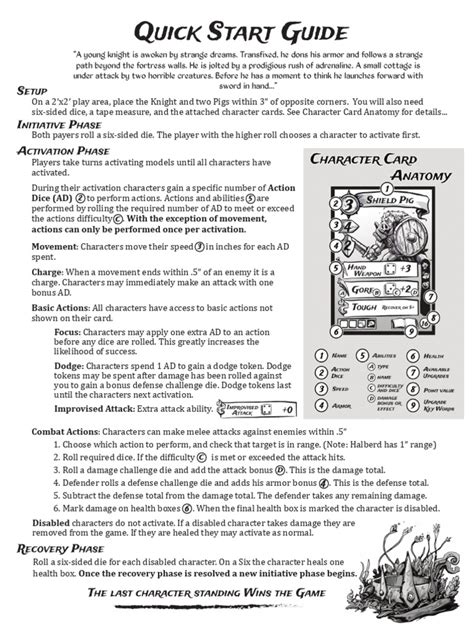
One of the most critical techniques is to introduce concepts incrementally rather than all at once. Instead of a massive text dump, guides often mirror good in-game tutorials, starting with basic movement and interaction before progressing to combat, crafting, or advanced strategy. This allows players to build a foundational understanding and muscle memory before more complex layers are added. Often, this involves structured quest lines or objectives that naturally guide players through essential systems.

Visual Aids and Practical Examples
Text alone can be insufficient for explaining spatial relationships, complex UI elements, or intricate build orders. Beginner guides frequently leverage screenshots, diagrams, flowcharts, and even embedded videos to illustrate points. Seeing a visual representation of a preferred opening build in a strategy game, or a highlighted path on a map, significantly aids comprehension. Practical examples, such as “Here’s how to craft your first basic tool” with step-by-step instructions, are far more effective than abstract explanations.

Analogies and Real-World Comparisons
To make abstract game concepts more relatable, guides often draw parallels to real-world scenarios or other familiar games. Explaining a complex economy system by comparing it to supply and demand principles, or a character class by likening it to a role in a team sport, can immediately click with a new player, bridging the gap between the unknown and the understood.
Interactive Learning and Sandbox Environments
While not strictly part of a written guide, many beginner guides encourage players to utilize in-game interactive tutorials, practice modes, or “sandbox” environments. Guides can direct players to these areas, explaining how to use them to experiment with mechanics without the pressure of failure. This hands-on experience, guided by the principles outlined in the text, solidifies learning.
Focus on Fundamentals First
A good beginner guide prioritizes core mechanics necessary for initial survival and progress. It helps new players distinguish between “must-know” information (how to attack, heal, move) and “nice-to-know” advanced strategies (optimal DPS rotations, endgame builds). By focusing on the absolute essentials, guides empower players to overcome the initial hump and enjoy the game, leaving deeper dives for later.
The Role of Community and Iteration
Beyond official documentation, community-created guides play a pivotal role. Passionate players often dissect games with an unparalleled level of detail and empathy for fellow beginners. These guides are frequently iterated upon, updated with new patches, expansions, and community feedback, ensuring they remain relevant and accurate. The collaborative nature often means a wider range of perspectives and simplification techniques are employed.

Conclusion
Beginner guides are not just instructional manuals; they are vital onboarding tools that foster player retention and cultivate enjoyment in complex gaming worlds. By strategically breaking down overwhelming information, employing visual and interactive learning techniques, and prioritizing fundamental understanding, these guides transform daunting challenges into accessible adventures. They ensure that the rich, rewarding experiences offered by complex games are available to everyone, regardless of their prior experience, ultimately enriching the gaming community as a whole.