


How can beginner guides simplify complex game systems without oversimplifying core fun?

Many of the most rewarding video games boast intricate systems – deep combat mechanics, expansive crafting, branching narratives, or complex economic models. While this depth is often what keeps players engaged for hundreds of hours, it can also be a formidable barrier for newcomers. The challenge for a beginner guide is to demystify these systems without stripping away the very elements that make the game compelling.
The Delicate Balance: Simplicity vs. Depth
At its heart, a good beginner guide aims to reduce the initial cognitive load. New players are often overwhelmed by a deluge of information, unfamiliar UI elements, and a seemingly endless list of possibilities. Simplification is necessary to get them over this initial hump, helping them grasp the fundamental loops of gameplay.
However, the danger lies in oversimplification. Trivializing core mechanics can make a rich game feel shallow, removing the strategic choices and sense of mastery that contribute to its long-term appeal. The ‘fun’ in a complex game often emerges from understanding its systems, making informed decisions, and overcoming challenges through strategic thinking, not by blindly following a pre-set path.
Strategies for Effective Simplification
1. Progressive Disclosure and Layered Learning
Instead of front-loading all information, introduce concepts gradually. Start with the absolute essentials needed for the first few hours of gameplay. As players progress and demonstrate mastery of basic concepts, introduce more advanced mechanics, strategies, or subsystems. This ‘need-to-know’ approach prevents information overload and allows players to build their understanding incrementally.

2. Focus on Core Loop and Immediate Goals
Identify the absolute core gameplay loop – what players will be doing 80% of the time – and focus the initial guide on that. For an RPG, it might be ‘explore, fight, loot, level up.’ For a strategy game, it could be ‘build, gather, research, expand.’ Guide players through their immediate objectives, explaining only the systems pertinent to achieving those goals, rather than every possible permutation.
3. Contextual Explanations and Practical Examples
Explaining a mechanic in isolation is less effective than showing it in context. Instead of just listing what a stat does, provide an example of how it impacts gameplay. “Strength increases your damage output, allowing you to defeat tougher enemies more quickly in combat.” Use screenshots, short video clips (if applicable to the guide format), or vivid descriptions to illustrate points with practical scenarios.
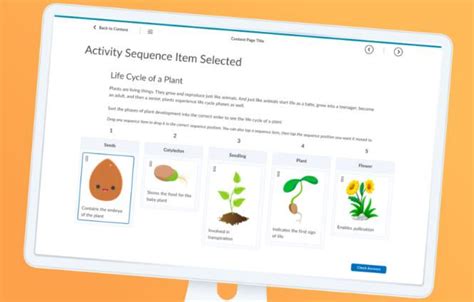
4. Visual Aids and Interactive Tutorials
Complex UIs can be daunting. Utilize visual aids like annotated screenshots, flowcharts, or diagrams to explain system relationships. If the guide is interactive (e.g., an in-game tutorial), use highlights, pointer arrows, and forced actions to guide the player’s attention and allow them to learn by doing. Hands-on experience is often the most effective way to internalize complex rules.
5. Emphasizing the “Why” Over Just the “How”
While explaining ‘how’ to perform an action is crucial, explaining ‘why’ that action is important connects the mechanic to the game’s strategic depth and overall fun. Instead of just saying “Press X to use a potion,” explain “Using a potion strategically can turn the tide of a difficult battle, allowing you to overcome challenges you otherwise couldn’t.” This elevates understanding beyond rote memorization.

6. Empowering Further Exploration
A great beginner guide doesn’t provide all the answers; it equips players to find them. Point to in-game encyclopedias, wikis, community forums, or specific advanced sections of the guide itself. Encourage experimentation and critical thinking. The core fun often lies in discovering optimal strategies and builds, and a guide should foster that sense of self-discovery rather than remove it.

The Goal: Empowerment, Not Spoon-Feeding
Ultimately, a successful beginner guide doesn’t hand-hold a player through every single step. Instead, it acts as a launchpad, providing the essential knowledge and confidence to engage with the game’s systems on their own terms. It clears the initial fog, reveals the foundational structure, and then gently nudges players towards the rewarding depths that await their personal exploration and mastery.
By carefully segmenting information, focusing on relevance, and connecting mechanics to purpose, beginner guides can truly simplify complexity, ensuring new players fall in love with a game’s intricate design without ever feeling that its core enjoyment has been diminished.