



How to write game guides that simplify complex mechanics for new players’ first steps?
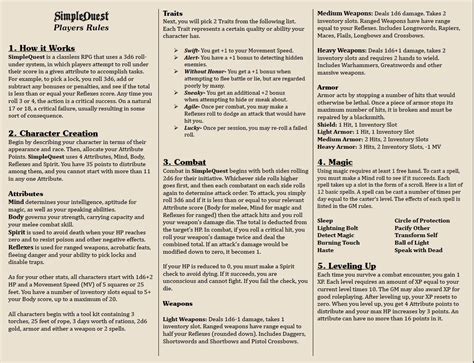
Entering a new game can be an exhilarating yet daunting experience, especially when faced with intricate mechanics, sprawling skill trees, or unconventional control schemes. For new players, these complexities can quickly lead to frustration and disengagement. A well-written game guide acts as a crucial bridge, transforming potential confusion into confident exploration. This article outlines key strategies for writing guides that truly simplify complex mechanics, ensuring new players take their first steps with clarity and confidence.
Understanding Your Audience: The Absolute Beginner
The first and most critical step in writing an effective beginner’s guide is to deeply understand your audience. Assume they know absolutely nothing about the game, or even the genre. Avoid jargon, acronyms, or references that an experienced player might understand but a newcomer wouldn’t. Think about the very first things they will encounter: movement, basic interaction, the first quest, or the initial UI elements. Your guide should anticipate their questions before they even know they have them.

Breaking Down Complexity Step-by-Step
Complex mechanics are rarely a single, monolithic concept. Instead, they are usually a chain of smaller, interconnected actions or ideas. Your job is to meticulously break down these chains into the smallest, most digestible components. For instance, instead of explaining ‘crafting,’ explain ‘how to gather resources,’ then ‘how to open the crafting menu,’ then ‘how to select a recipe,’ and finally ‘how to craft an item.’ Each step should be a distinct, easily repeatable action.
Use numbered lists or bullet points for sequences of actions. Start with the foundational elements and gradually build up to more advanced concepts. Resist the urge to explain everything at once; focus on what the player needs to know to successfully complete their *very next* objective.
Clarity, Conciseness, and Visual Aids
Your language must be crystal clear and concise. Avoid lengthy explanations where a short, direct sentence will suffice. Use active voice and unambiguous terms. Where possible, use analogies to real-world concepts or simpler game mechanics if it aids understanding, but do so sparingly to avoid creating new confusion.
Crucially, emphasize the importance of visual aids. While you’re writing text, suggest where screenshots, diagrams, or short video clips would be invaluable. For example, explain ‘click the ‘Inventory’ button in the top-left corner,’ but suggest a visual could show exactly where that button is located, or what a specific UI element looks like when active. Text describes, visuals show.
Focusing on Immediate Practicality and ‘Why’
New players are often overwhelmed by options. Your guide should focus on the most immediately practical information they need to progress or achieve a small, early victory. Don’t just tell them ‘how’ to do something; explain ‘why’ it’s important or what benefit it provides at this early stage. For example, instead of just ‘press E to pick up items,’ add ‘picking up these items allows you to craft basic tools, which will help you survive your first night.’ This provides context and motivation.
Provide simple, achievable practice tasks. After explaining ‘how to jump and climb,’ suggest ‘try jumping over this small obstacle to reach the next area.’ This reinforces learning through immediate application.

Testing and Iteration
Once you’ve drafted your guide, the work isn’t over. Have someone who has never played the game (or is new to it) test your guide. Observe their actions. Do they get stuck? Do they misunderstand a term? Do they skip sections? Their struggles are invaluable feedback for refining your explanations. Be prepared to rephrase, reorder, or add more detail where necessary. A truly effective guide is often the result of several iterations, continuously refined for maximum clarity and user-friendliness.

Conclusion
Writing a game guide that simplifies complex mechanics for new players is an art form rooted in empathy, clarity, and precision. By understanding your audience, breaking down concepts, using concise language, and focusing on practical first steps, you can create a welcoming gateway for countless players. A well-crafted guide doesn’t just explain a game; it opens up a world of enjoyment, transforming initial confusion into lasting engagement and fostering a love for the game from the very first step.