




Practical guide: How to pick age-appropriate video games via ESRB/PEGI?

Understanding Video Game Ratings: Your Essential Toolkit
In today’s digital age, video games are a ubiquitous form of entertainment for children and adults alike. While games offer numerous benefits, from enhancing problem-solving skills to fostering creativity, parents often face the daunting task of sifting through thousands of titles to determine what’s truly suitable for their kids. This is where standardized rating systems like the Entertainment Software Rating Board (ESRB) and Pan European Game Information (PEGI) become invaluable guides.
These systems are designed to help consumers make informed decisions about the content of video games. By providing clear, concise information about a game’s intended audience and its thematic elements, ESRB and PEGI empower parents to align gaming choices with their family’s values and their child’s developmental stage. Ignoring these ratings can inadvertently expose children to mature content, potentially leading to discomfort or confusion. Understanding how to use these tools effectively is the first step toward creating a safe and enriching gaming environment for your family.

What Are ESRB and PEGI?
The ESRB: North America’s Guide
The Entertainment Software Rating Board (ESRB) is a self-regulatory organization that assigns age and content ratings for video games and apps in the United States, Canada, and Mexico. Established in 1994, the ESRB’s mission is to help consumers, especially parents, make informed choices about the games they and their children play.
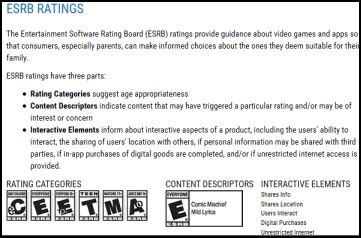
ESRB ratings consist of two key components:
- Rating Categories: These suggest the appropriate age group for a game. Examples include E (Everyone), E10+ (Everyone 10+), T (Teen), M (Mature 17+), and AO (Adults Only 18+).
- Content Descriptors: These explain why a game received a particular rating. Descriptors might include ‘Violence,’ ‘Blood,’ ‘Strong Language,’ ‘Sexual Themes,’ ‘Use of Alcohol,’ ‘Gambling,’ and many more.
Additionally, the ESRB introduced ‘Interactive Elements’ to highlight features like in-game purchases, user-generated content, and online interaction that can impact the player experience.
PEGI: Europe’s Comprehensive System
Pan European Game Information (PEGI) is the European equivalent of the ESRB, providing age classifications for video games across most of Europe. Launched in 2003, PEGI aims to offer a consistent and easily understandable system for parents to assess the suitability of game content. While similar in purpose to the ESRB, PEGI’s structure and specific age categories differ.
PEGI ratings also have two main parts:
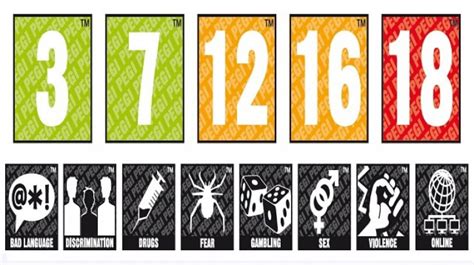
- Age Labels: These recommend the minimum age for a player. Categories include PEGI 3, PEGI 7, PEGI 12, PEGI 16, and PEGI 18. Unlike ESRB, these are strictly age recommendations, not necessarily indicative of difficulty.
- Content Descriptors: Similar to ESRB, these icons explain the type of content present in the game. Common descriptors include ‘Violence,’ ‘Bad Language,’ ‘Fear,’ ‘Gambling,’ ‘Drugs,’ ‘Sex,’ ‘Discrimination,’ and ‘Online Purchases.’
PEGI’s clear, pictorial system makes it accessible across various languages and cultures, providing a standardized approach to content classification throughout the European continent.
A Practical Guide for Parents: Making Informed Choices
Now that you understand the basics of ESRB and PEGI, here’s a step-by-step guide to applying this knowledge effectively:
- Locate the Rating: Always look for the rating symbol. For physical games, it’s prominently displayed on the front and back of the game box. For digital downloads, it’s usually on the game’s product page in online stores (e.g., PlayStation Store, Xbox Games Store, Nintendo eShop, Steam, App Store, Google Play).
- Read the Content Descriptors: The age rating is just a starting point. The descriptors are crucial because they explain what earned the game that rating. A ‘Teen’ game with ‘Fantasy Violence’ might be very different from a ‘Teen’ game with ‘Sexual Themes’ or ‘Use of Alcohol.’
- Watch Gameplay Trailers and Reviews: If you’re still unsure, search for gameplay videos on platforms like YouTube or read reviews from reputable gaming websites. Seeing the game in action can provide a much clearer picture than just the ratings and descriptors alone.
- Talk to Your Child: Engage in a conversation. Ask them why they want a particular game, what their friends are playing, and what they expect from it. This open dialogue not only informs your decision but also teaches your child about responsible media consumption.
- Consider Your Family Values: Ratings are guidelines, not absolute rules. What’s acceptable in one household might not be in another. Use your discretion and consider what aligns with your family’s specific values and your child’s maturity level.
Beyond the Ratings: Other Factors to Consider
While ESRB and PEGI are invaluable tools, they don’t cover every aspect of a game that might concern parents. Consider these additional points:
- Online Interaction: Many games feature online multiplayer modes where players can interact with strangers. Be aware of communication features (voice chat, text chat) and consider setting up parental controls on consoles or PCs to manage or restrict these interactions.
- In-Game Purchases (Microtransactions): Many free-to-play or even full-priced games include options to buy virtual items, currency, or cosmetic upgrades. These can sometimes lead to unexpected expenses. Discuss this with your child and implement parental controls to prevent unauthorized purchases.
- Time Commitment and Addiction: Some games are designed to be highly engaging and can be time-consuming. Monitor your child’s screen time and set clear boundaries to ensure gaming is balanced with other activities like homework, outdoor play, and social interaction.
- Influence of Friends: Peer pressure can be strong. Your child might want to play a game their friends are enjoying, even if it’s rated above their age. Use ratings as a basis for discussion and set firm limits if necessary.

Conclusion: Empowering Parents for Smarter Gaming Choices
Choosing age-appropriate video games doesn’t have to be a guessing game. By leveraging the comprehensive information provided by the ESRB and PEGI, coupled with your own judgment and an open dialogue with your child, you can confidently navigate the world of digital entertainment. These rating systems are designed to empower you, the parent, to make informed decisions that ensure your children enjoy games that are not only fun but also safe and suitable for their age and maturity. Make them a regular part of your game selection process, and you’ll foster a positive and responsible gaming experience for your entire family.