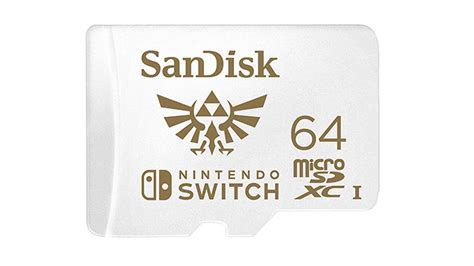





Best Switch SD card for maximizing game storage & speed?

Why a Good SD Card is Crucial for Your Switch
The Nintendo Switch, a marvel of portable gaming, comes with a rather modest 32GB (or 64GB for the OLED model) of internal storage. While this might suffice for a handful of indie titles or physical game cartridges, avid gamers who frequently download digital titles, DLC, or large updates will quickly find themselves running out of space. A high-quality microSD card is not just an optional accessory; it’s an essential upgrade that dramatically expands your game library potential and can even improve loading times.
Choosing the right SD card involves more than just picking the largest capacity. Speed is equally vital, affecting how quickly games load, updates install, and even how smoothly certain titles run. A slow card can lead to frustrating delays, undermining the seamless experience the Switch is designed to deliver. This guide will help you navigate the options to find the perfect balance of storage and speed for your gaming needs.

Understanding SD Card Specifications: Speed & Capacity
When shopping for a Switch SD card, you’ll encounter various technical specifications. The most critical are capacity (measured in GB or TB) and speed ratings. The Nintendo Switch supports microSDXC cards, which means it can handle capacities up to 2TB, although 1TB is currently the largest widely available and practical option.
Speed Ratings Explained
- UHS-I (Ultra High Speed Phase I): The Switch supports UHS-I cards, which are typically fast enough for gaming. You don’t need a more expensive UHS-II card, as the Switch doesn’t utilize its faster interface.
- Speed Class (C): Indicated by a number inside a ‘C’ (e.g., C10), this denotes minimum sequential write speed in MB/s. C10 means 10MB/s.
- UHS Speed Class (U): Indicated by a number inside a ‘U’ (e.g., U1, U3), this also denotes minimum write speed. U1 guarantees 10MB/s, while U3 guarantees 30MB/s. For Switch gaming, U3 is recommended for optimal performance.
- Video Speed Class (V): Indicated by V10, V30, V60, V90. V30 guarantees a minimum write speed of 30MB/s, aligning with U3. This is ideal for smooth gaming.
- Application Performance Class (A): Indicated by A1 or A2, this class specifies minimum random read and write speeds, crucial for loading multiple small files common in game assets. An A1 rating is sufficient and recommended for the Switch, offering better performance than cards without this rating. A2 is even faster but might not be fully utilized by the Switch, and cards with A2 ratings can sometimes be more expensive without a noticeable benefit for Switch gaming.
Look for cards that are UHS-I, U3, V30, and A1 for the best balance of speed and value on your Nintendo Switch.
Recommended Capacities for Switch Gamers
Your ideal SD card capacity depends heavily on your gaming habits.
- 128GB: The Casual Gamer. If you mostly play physical cartridges and only download a few digital indies or DLCs, 128GB offers a comfortable buffer without a huge investment.
- 256GB: The Moderate Digital Collector. This is a popular sweet spot, providing ample space for a decent library of digital games, including some larger AAA titles, without breaking the bank.
- 400GB/512GB: The Dedicated Digital Gamer. For those who buy many digital games and want to keep a large selection installed at all times, a 512GB card offers significant freedom. It’s often considered the best value-to-capacity ratio for serious Switch players.
- 1TB: The Ultimate Collection. If you want to download every game imaginable and never worry about deleting anything, a 1TB card is the pinnacle. While pricier, it offers unparalleled storage for years of gaming.

Top SD Card Brands to Consider
While many brands offer microSD cards, a few consistently stand out for reliability, performance, and value. Sticking with reputable manufacturers reduces the risk of counterfeit cards or premature failures.
- SanDisk: Widely recognized, SanDisk offers cards specifically licensed by Nintendo, featuring iconic Mario designs. Their ‘Extreme’ and ‘Ultra’ lines are excellent choices, often meeting the U3/V30/A1 specifications.
- Samsung: Samsung’s ‘EVO Select’ and ‘PRO Plus’ series are highly regarded for their robust performance and reliability. They are strong competitors to SanDisk in both speed and durability.
- Lexar: Known for producing high-performance memory solutions, Lexar’s ‘PLAY’ and ‘Professional’ microSDXC cards are solid options that consistently deliver on speed and capacity.
- PNY: PNY offers good value, particularly with their ‘Elite-X’ line, which meets the recommended speed specifications for the Switch.
Always purchase from trusted retailers to avoid fake cards, which can lead to data loss or poor performance.
Making Your Final Decision
When choosing the best SD card for your Nintendo Switch, prioritize a card that is UHS-I, U3, V30, and A1. Then, select a capacity that aligns with your gaming habits and budget. For most dedicated digital gamers, a 256GB or 512GB card offers the best balance of storage and cost-effectiveness. Those with smaller digital libraries or who rely heavily on physical cartridges can save money with a 128GB card, while the ultimate collectors might splurge on 1TB.
Keep an eye out for sales, especially around major shopping holidays, as microSD cards frequently go on discount. Investing in a quality SD card is one of the best ways to future-proof your Switch and ensure an uninterrupted, enjoyable gaming experience for years to come.