




For game how-tos, how do we best avoid jargon to help true beginners succeed?
The Beginner’s Dilemma: Navigating the Jargon Labyrinth
Imagine diving into a new game, excited to learn the ropes, only to be met with a barrage of terms like “aggro management,” “DPS rotation,” “buff stacking,” or “proc coefficients.” For seasoned players, these are second nature, but for true beginners, they form an impenetrable wall of technical jargon. This linguistic barrier is a significant hurdle in game how-to guides, often leading to frustration, confusion, and ultimately, players abandoning a game before they even grasp its core mechanics. Our goal as guide creators is to smooth this entry point, making complex systems understandable and inviting.

The challenge lies in translating intricate game concepts into digestible information without sacrificing accuracy. It’s not just about defining terms; it’s about presenting them in a context that makes immediate sense to someone with zero prior knowledge. This requires a shift in perspective, stepping outside the expert mindset and into the shoes of a novice.
Strategies for Jargon-Free Game Guides
Define and Explain Every New Concept
Assume nothing. Every unique term, mechanic, or acronym specific to the game or even the gaming genre should be introduced and explained clearly the very first time it appears. Don’t just define; elaborate on its purpose and impact. For instance, instead of just saying “DPS,” explain it as “Damage Per Second – how much damage your character can deal over time, which is crucial for defeating tough enemies quickly.”
Use Analogies and Real-World Comparisons
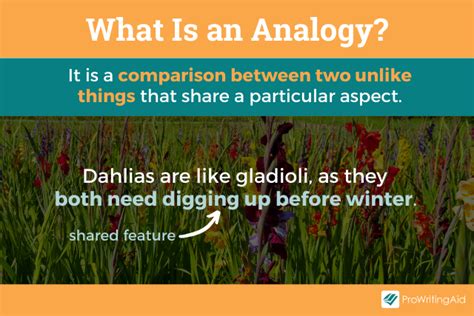
One of the most effective ways to demystify game mechanics is to relate them to familiar concepts. If a game has a “threat” system, compare it to how a guard dogs focuses on the person making the most noise. If there’s a “cooldown” on an ability, explain it like waiting for a microwave to finish or for a battery to recharge. These analogies create mental hooks that help beginners grasp abstract ideas quickly.
Employ Visual Aids and Examples Extensively
Text alone can be overwhelming. Integrate screenshots, short video clips, or animated GIFs that demonstrate the concepts you’re explaining. Show, don’t just tell. If you’re talking about a “skill tree,” show an annotated screenshot highlighting where to click and what the different branches mean. Illustrate a “combo” with a visual sequence of button presses and their resulting in-game action. Visuals cut through jargon by providing direct context.
Adopt Simple, Direct Language
Avoid overly complex sentence structures or academic prose. Stick to active voice and straightforward vocabulary. Break down long explanations into shorter paragraphs or bullet points. Focus on one idea per sentence where possible. The goal is clarity and conciseness, making the information easy to scan and comprehend.
Test with True Beginners
The ultimate litmus test for any beginner guide is to have actual beginners read and use it. Observe where they struggle, what terms they ask about, and what sections they find confusing. This invaluable feedback will highlight areas where jargon inadvertently crept in or explanations were insufficient. Iterate and refine based on their experience, not your own expert assumptions.

Practical Steps for Writers
- Create a Glossary: Even if you define terms in-line, a consolidated glossary at the beginning or end of your guide can be a lifesaver for quick reference.
- Use Consistent Terminology: Stick to the official in-game terms, but always explain them. Don’t invent your own jargon.
- Prioritize Core Concepts: Focus on what a beginner absolutely needs to know to start playing and enjoying the game. Advanced strategies can come later.
- Empathize with the Reader: Remember the feeling of being completely lost in a new game. Write from that perspective.

Conclusion: Opening the Gates to Gaming Fun
Avoiding jargon in game how-to guides isn’t just about good writing; it’s about inclusivity and enhancing the player experience. By consciously simplifying language, providing clear explanations, utilizing visuals, and testing with our target audience, we can transform intimidating game mechanics into exciting discoveries. Our guides become less of a technical manual and more of a friendly mentor, guiding true beginners past the initial hurdles and into the heart of the game’s fun. This not only helps individual players succeed but also contributes to a more vibrant and accessible gaming community.