
How to choose family-friendly video games with ESRB ratings?

Video games are a staple in many households, offering entertainment, education, and social interaction. However, finding games that align with your family’s values and are appropriate for your children’s age can be a significant challenge. This is where the Entertainment Software Rating Board (ESRB) ratings become an indispensable tool for parents seeking to make informed decisions about their family’s digital entertainment.

Understanding the ESRB System
The ESRB is a self-regulatory organization that assigns ratings to video games and apps in the U.S. and Canada. These ratings provide concise, objective information about a game’s content, helping consumers, especially parents, make informed choices.
ESRB Age Categories:
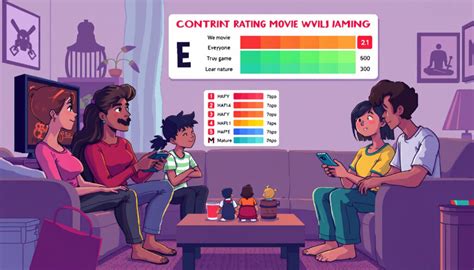
- EC (Early Childhood): Content is suitable for children ages 3 and older and contains no inappropriate material.
- E (Everyone): Content is generally suitable for all ages. May contain minimal cartoon, fantasy or mild violence and/or infrequent mild language.
- E10+ (Everyone 10+): Content is generally suitable for ages 10 and up. May contain more cartoon, fantasy or mild violence, mild language, and/or minimal suggestive themes.
- T (Teen): Content is generally suitable for ages 13 and up. May contain violence, suggestive themes, crude humor, minimal blood, simulated gambling, and/or infrequent use of strong language.
- M (Mature): Content is generally suitable for ages 17 and up. May contain intense violence, blood and gore, sexual content, and/or strong language.
- AO (Adults Only 18+): Content suitable only for adults ages 18 and up. May include prolonged scenes of intense violence, graphic sexual content, and/or gambling with real currency.

Delving into Content Descriptors
Beyond the age rating, ESRB provides “Content Descriptors” – short phrases that explain why a game received its particular rating. These are crucial for understanding the specifics of a game’s content and can highlight nuances that a simple age rating might miss.
- Examples include: “Fantasy Violence,” “Mild Language,” “Blood,” “Suggestive Themes,” “Use of Alcohol,” “Simulated Gambling,” “Drug Reference,” and many more.
- Always check these descriptors, which are typically found on the game box or digital store page. Two games with an “E10+” rating, for instance, might have very different content; one could be due to “Fantasy Violence” while another is due to “Mild Language.” Understanding these details allows for a more granular assessment.
Beyond the Rating: Other Factors to Consider
While ESRB ratings are excellent guides, they are not the only factor parents should consider. A holistic approach ensures the best fit for your family.
- Online Interactions: Many games include online multiplayer features, allowing players to interact with strangers. Be aware of potential unmoderated chat, user-generated content, or in-game purchases within these environments. Always look for the “Online Interactions Not Rated by the ESRB” notice.
- In-Game Purchases/Microtransactions: Be mindful of games that encourage or require additional purchases for content, cosmetics, or to progress. Discuss budgeting and set clear expectations with your children regarding these.
- Time Commitment & Addiction: Some games are designed to be highly engaging and time-consuming. Consider the potential for excessive screen time and how it fits into your family’s schedule and other activities.
- Your Child’s Maturity: An “E10+” game might be perfectly fine for one 10-year-old but too intense or complex for another. You know your child best; individual maturity and sensitivity levels should always factor into your decision.

Practical Tips for Parents
Empowering yourself with knowledge is the first step. Here are some practical tips to help you navigate the world of video games:
- Play Together: The best way to understand a game is to play it with your child or watch them play. This gives you firsthand insight into the content, gameplay, and overall experience.
- Do Your Research: Read reviews from trusted gaming sites and parent forums, watch gameplay videos on platforms like YouTube or Twitch, and talk to other parents about their experiences.
- Set Clear Rules: Establish family rules about gaming time, online interactions, and in-game purchases. Utilize parental controls available on consoles, PCs, and mobile devices to help enforce these boundaries.
- Encourage Communication: Create an open environment where your children feel comfortable discussing what they encounter in games, whether it’s something fun, confusing, or concerning.
- Trust Your Instincts: If a game feels wrong for your child, even if the rating seems acceptable, don’t hesitate to say no. Your parental judgment is invaluable.

Conclusion
Choosing video games for your family doesn’t have to be a guessing game. By understanding and effectively utilizing ESRB ratings – both the age categories and content descriptors – and considering other vital factors like online interactions, in-game purchases, and your child’s individual maturity, you can confidently select games that provide safe, fun, and enriching experiences for everyone. Empower yourself with this knowledge and make informed decisions for your family’s digital entertainment, fostering a healthy and enjoyable gaming environment.