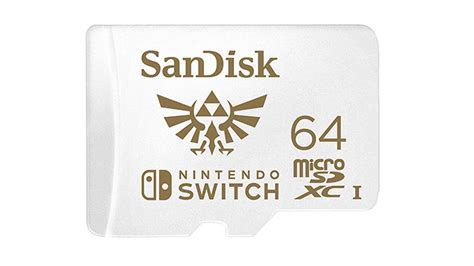





What’s the best microSD card for Switch for optimal game loading times?

Enhancing Your Switch Gaming Experience with the Right microSD Card
For any Nintendo Switch owner, expanding storage is almost a necessity. With an ever-growing library of digital titles, the console’s internal 32GB (or 64GB for OLED) can quickly become insufficient. But it’s not just about capacity; the speed of your microSD card directly impacts game loading times, ensuring a smoother and more enjoyable gaming experience. So, what exactly makes a microSD card ‘best’ for the Switch, and what should you look for?

Understanding MicroSD Card Specifications for Switch
The Nintendo Switch supports UHS-I (Ultra High Speed Phase I) microSD cards. This is a crucial detail, as while newer UHS-II cards exist and offer faster theoretical speeds, the Switch itself cannot fully utilize them. Investing in a UHS-II card would be an unnecessary expense, as its performance would be capped at UHS-I speeds by the console’s hardware.
Key Specifications to Look For:
- UHS Speed Class 3 (U3): This indicates a minimum sequential write speed of 30 MB/s. While read speeds are often higher and more critical for loading games, a good U3 rating generally correlates with better overall performance.
- Video Speed Class V30: Similar to U3, V30 guarantees a minimum sequential write speed of 30 MB/s, often found on high-performance cards.
- Application Performance Class A1 or A2: This is arguably the most important specification for gaming. A1 cards offer a minimum of 1,500 IOPS (Input/Output Operations Per Second) for random read and 500 IOPS for random write. A2 cards dramatically improve on this, providing a minimum of 4,000 IOPS for random read and 2,000 IOPS for random write. Higher IOPS translate directly to faster loading of game assets, menu navigation, and overall responsiveness for applications (games).
While the Switch itself might not fully saturate the absolute peak theoretical speeds of the fastest A2/U3 cards, these ratings ensure excellent baseline performance, particularly in random read operations which are crucial for loading small, scattered game files quickly.
Top Recommended MicroSD Cards for Optimal Performance
Based on the specifications above, and real-world testing by countless users, certain brands and series consistently stand out for their reliability and performance on the Nintendo Switch:
- SanDisk Extreme / Extreme Pro: These cards are consistently among the top performers, often featuring A2 and U3 ratings. They offer excellent read and write speeds, significantly cutting down on loading times. The ‘For Nintendo Switch’ licensed cards are essentially rebranded SanDisk Extreme cards, offering the same performance with a Switch-themed design.
- Samsung EVO Select / EVO Plus: Samsung’s EVO line also offers strong performance, typically with U3 and A2 ratings. They provide a great balance of speed, reliability, and value.
- Lexar Play: Designed specifically for gaming and mobile devices, Lexar Play cards often come with A2 ratings and deliver competitive speeds at a good price point.
When choosing, focus on cards that clearly state U3 and, ideally, A2 ratings. While capacity is up to personal preference (256GB, 512GB, or even 1TB are popular choices), don’t compromise on speed for the sake of a slightly larger card if it means a lower performance class.
Capacity vs. Speed: Finding the Right Balance
While a 1TB card might sound appealing, consider your budget and actual needs. Larger capacity cards generally cost more per gigabyte. For most users, a 256GB or 512GB card offers a sweet spot between storage space and affordability without sacrificing speed. Only opt for 1TB if you plan to download a truly massive digital library and rarely delete games.
Remember, prioritizing a card with an A2 and U3 rating, even if it means a slightly smaller capacity, will provide a noticeably better experience in terms of game loading and overall system responsiveness than a larger, slower card.
Verifying Your Card and Avoiding Fakes
Unfortunately, the market for microSD cards can sometimes include counterfeit products. Always purchase from reputable retailers to minimize the risk. Once you receive your card, you can use PC software like H2testw (for Windows) or F3 (for Mac/Linux) to test its actual capacity and write/read speeds. This helps ensure you received a genuine product that performs as advertised.

Conclusion
For the optimal Nintendo Switch gaming experience with the fastest possible game loading times, focus on microSD cards with a UHS Speed Class 3 (U3) and, most importantly, an Application Performance Class 2 (A2) rating. Brands like SanDisk Extreme, Samsung EVO Select, and Lexar Play consistently deliver excellent performance. While capacity is a personal choice, prioritizing speed will ensure your games load swiftly, getting you into the action faster and keeping your adventures on the Switch as seamless as possible.